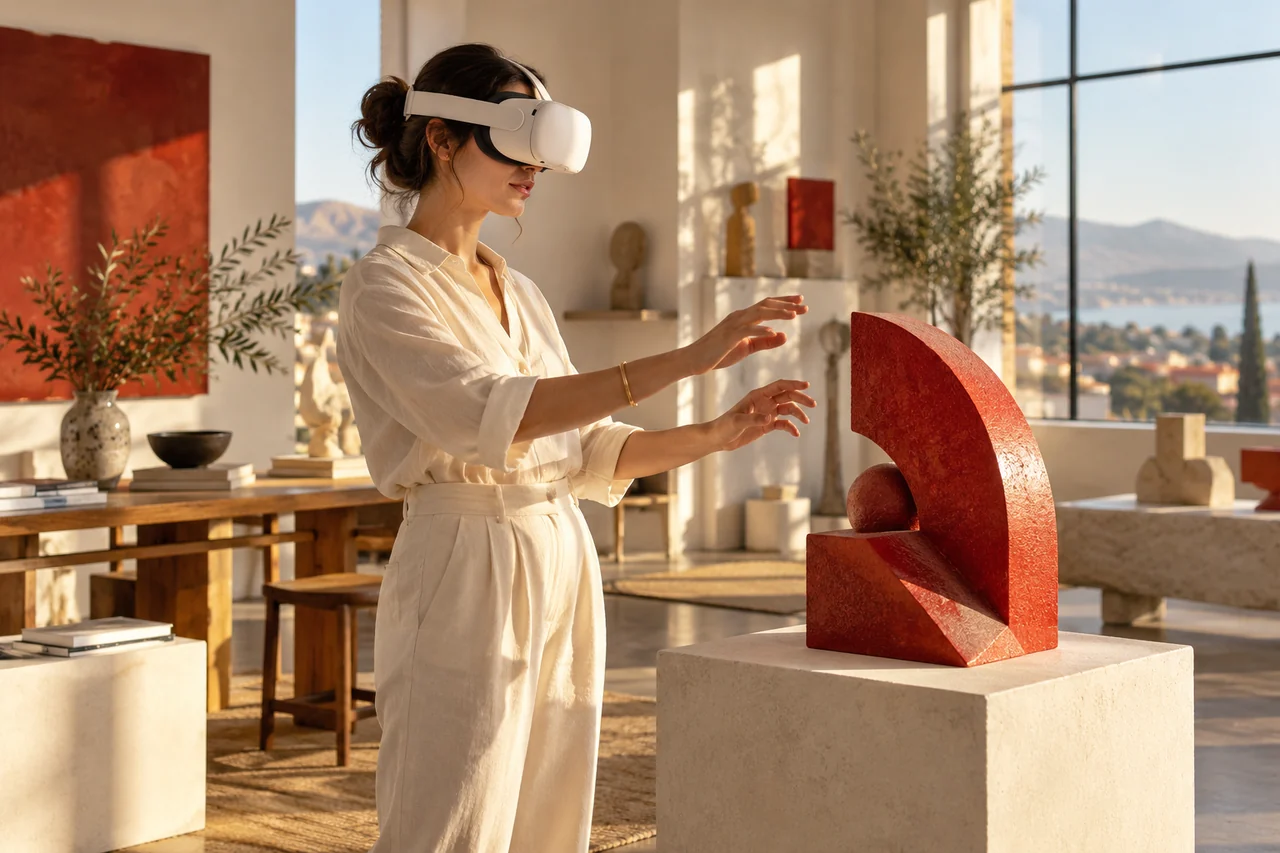
An immersive application begins in a physical room that the design team does not control. Furniture, lighting, other people and available floor space vary. A dependable setup flow helps users establish a suitable arrangement without pretending the application has perfect knowledge of their surroundings. It should communicate the experience's requirements, adapt where possible and preserve an easy route to stop or reposition.
State the physical requirements before entry
Tell people whether the activity is seated, stationary standing or intended to involve movement. Explain any essential clear space or equipment needs in plain language before they enter a demanding scene. A late discovery that the task requires a large area can make the entire setup effort feel wasted.
Keep requirements tied to real interaction demands. If the experience can bring a distant control closer, it should not insist that users walk to it. Offer a reduced-movement layout when it preserves the task's purpose. Test the requirements in ordinary homes and workplaces rather than only in a spacious studio cleared specifically for demonstrations.
Work with platform boundaries and permissions
Use the platform's established boundary and room-understanding mechanisms where available, and follow its interaction conventions. Do not imply that a visualized room mesh identifies every hazard or remains perfectly current. The application still needs sensible behavior when information is unavailable, denied or incomplete.
Request capabilities when their purpose is understandable. Explain what a room scan enables and provide a viable alternative where the product supports one. If a required capability is unavailable, give a specific next step or a clear explanation of the limitation. Repeating an unexplained permission prompt rarely helps users make an informed choice or resolve the underlying setup problem.
Place content for the person’s current posture
Establish a comfortable initial location for the main content and allow adjustment before the task starts. Seated users, standing users and people of different heights should not inherit the same fixed reach assumptions. The controls for adjustment need to be reachable themselves; a setup panel placed too high creates a circular problem.
Provide previews of the occupied space for large virtual objects. Let users rotate or relocate the arrangement without restarting the entire experience. Preserve accurate scale where the task depends on it, while adapting the interface around the model. A room setup should make the relationship between real space and virtual content clear rather than asking users to infer it from trial and error.
Handle interruptions without losing the task
People may remove the headset, step away or need to respond to someone nearby. Pause consequential interaction appropriately and make the return state understandable. If the physical arrangement changes, let the user review placement before resuming an activity that assumes the old setup.
Test the setup with limited space, an incomplete scan and a posture change midway through use. Verify that exiting and resetting remain available and that saved work survives repositioning. The release checklist should cover requirements, permission handling, adaptable placement and interruption recovery. A thoughtful room flow lets users establish a usable session calmly, while keeping the application honest about what it knows and what it expects.
The key decisions.
- Explain physical requirements before the immersive task begins.
- Use platform setup mechanisms without overstating their awareness.
- Support repositioning, interruption and posture changes gracefully.
Sources & further reading
Primary references for the concepts discussed. Check the applicable documentation when planning implementation.