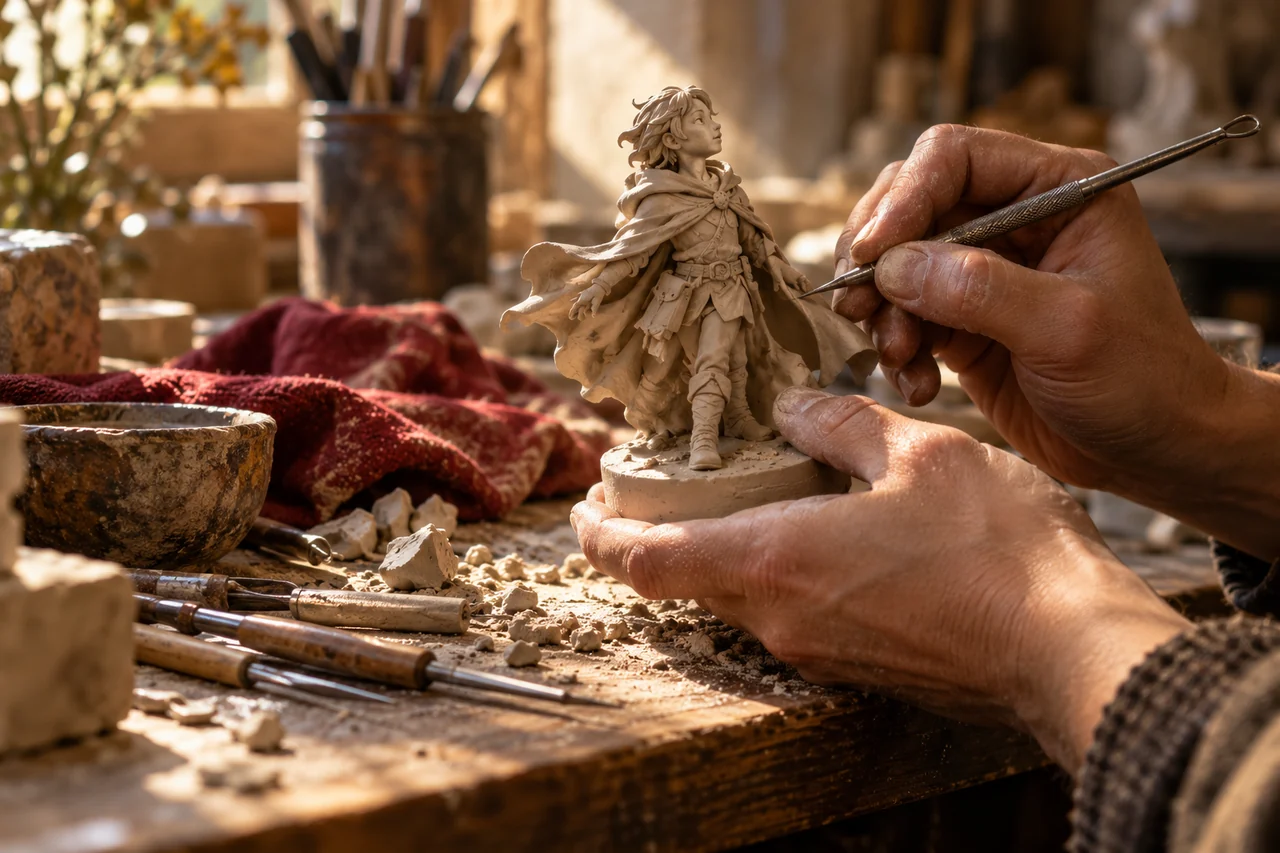
Final quality control works best when it checks an agreed result rather than introducing a new aesthetic direction. The collectible should be compared with its approved sculpt, physical finish proof and assembly specification. Organize the inspection so visible craft issues, functional fit and missing components are each considered. This gives the team a consistent way to distinguish a correctable defect from an accepted variation in handmade work.
Establish the reference and inspection conditions
Use the approved physical sample or clearly identified reference set, not an outdated render from an earlier revision. Record the collectible’s part and finish version. Inspect under consistent neutral lighting with enough space to rotate the object safely. Add normal display-distance viewing alongside close inspection.
Define the standard before reviewing the production pieces. Identify focal areas that deserve particular attention and describe acceptable variation honestly. A hand-painted surface may vary slightly while remaining consistent with the approved direction. Do not invent tolerances after seeing a defect simply to pass or reject a piece.
Review visual craft in a fixed sequence
Begin with the overall silhouette, likeness or character identity. Then inspect surface preparation, paint boundaries, color relationships and sheen. Look for changes that alter expression, visible support scars, unintended seams and finish inconsistencies. A fixed sequence reduces the chance that one striking detail distracts from a larger problem.
Rotate the piece and inspect less prominent views too. The back and underside may contain assembly marks, but their treatment should match the agreed specification. Formlabs’ finishing guidance provides background on preparation and painting stages; quality control should check the actual result of those stages rather than assuming they were completed correctly because a checklist was signed.
Check assembly, completeness and handling
Confirm that required parts are present, joints seat correctly and the base sits as intended. Test only the handling and removal actions the object is designed to support. Avoid introducing arbitrary stress tests on a finished artwork when the necessary validation should have occurred on representative prototypes.
Match accessories, labels and any documentation to the correct piece. Inspect removable parts in their packed and assembled states so both delivery and display are covered. Confirm that the assembly guide uses the same identifiers and that the owner can complete the intended sequence without touching fragile surfaces unnecessarily.
Record decisions and close defects visibly
Log each issue with its location, photograph and required action. Separate rework from a request to change the approved design. After correction, reinspect the affected area and any nearby finish that may have been disturbed. Do not treat a repair as complete solely because the work was attempted.
Keep a final condition record before packing, including the assembled piece and its component inventory. Use recurring defects to improve upstream sculpting, preparation or packaging decisions. Quality control is valuable when it creates a shared standard and a clear closure process. It should help deliver the intended collectible consistently, while preserving an accurate record of what was approved and shipped.
The key decisions.
- Inspect against identified approved references under consistent conditions.
- Review visual craft, assembly and completeness as distinct acceptance areas.
- Document defects, verify rework and record final condition before packing.
Sources & further reading
Primary references for the concepts discussed. Check the applicable documentation when planning implementation.